Product Description
300Bar Air Compressor
Portable high pressure air compressor is a portable compressor for breathing in diving, firefighting. It is small and light, and can be moved by a single man. It compresses free air to 30Mpa and removes oil, vapor and other contaminants by filters and separators. It is safe and reliable source of pure air. The air quality accords to EN international breathing compressed air quality
Features:
4-stage, air-cooling piston reciprocating
Oil splash lubrication
Stainless steel inter-cooler and after cooler
Specially treated alloy cylinder, piston and piston ring
High-strength nylon cooling fan assembly
Manual condensate drain knobs
Intake filter
Anti-shock floor mat
Anti-shock pressure gauge
Safety valves protection for every stage
High temperature resistance plastic powder coating steel frame and base
Activated carbon, monocular sieve for air purification in the filter
Filters are made by seamless aluminum alloy and bears 550bar pressure
1 Filling hose and filling valve
Consumables and manuals are provided with every compressor
1 year warranty
| Model | Operating pressure | Drive | Delivery rate | Power | Dimension | N. weight | Noise level |
| 100L/min | 300BAR | Honda engine | 100L/min | 5.5Hp | 74*32*41 | 43 kg | <79 dB(A) |
| 100L/min | 300BAR | three-phase motor | 100L/min | 3kw | 60*38*41 | 44 kg | <78 dB(A) |
| 100L/min | 300BAR | single-phase motor | 100L/min | 2.2kw | 60*38*41 | 45 kg | <78 dB(A) |
SCBA Fire fighting Air Breathing Apparatus
EEBD Emergency Escape Breathing Device
| Capacity: | 100L/Min~500L/Min |
|---|---|
| Engine: | Gasoline Motor/Electric Motor |
| Pressure: | 30MPa |
| Type: | Rotary |
| Performance: | Low Noise |
| Drive Mode: | Automatic |
| Samples: |
US$ 1700/Piece
1 Piece(Min.Order) | |
|---|
| Customization: |
Available
|
|
|---|
.webp)
What role do air dryers play in compressed air systems?
Air dryers play a crucial role in compressed air systems by removing moisture and contaminants from the compressed air. Compressed air, when generated, contains water vapor from the ambient air, which can condense and cause issues in the system and end-use applications. Here’s an overview of the role air dryers play in compressed air systems:
1. Moisture Removal:
Air dryers are primarily responsible for removing moisture from the compressed air. Moisture in compressed air can lead to problems such as corrosion in the system, damage to pneumatic tools and equipment, and compromised product quality in manufacturing processes. Air dryers utilize various techniques, such as refrigeration, adsorption, or membrane separation, to reduce the dew point of the compressed air and eliminate moisture.
2. Contaminant Removal:
In addition to moisture, compressed air can also contain contaminants like oil, dirt, and particles. Air dryers help in removing these contaminants to ensure clean and high-quality compressed air. Depending on the type of air dryer, additional filtration mechanisms may be incorporated to enhance the removal of oil, particulates, and other impurities from the compressed air stream.
3. Protection of Equipment and Processes:
By removing moisture and contaminants, air dryers help protect the downstream equipment and processes that rely on compressed air. Moisture and contaminants can negatively impact the performance, reliability, and lifespan of pneumatic tools, machinery, and instrumentation. Air dryers ensure that the compressed air supplied to these components is clean, dry, and free from harmful substances, minimizing the risk of damage and operational issues.
4. Improved Productivity and Efficiency:
Utilizing air dryers in compressed air systems can lead to improved productivity and efficiency. Dry and clean compressed air reduces the likelihood of equipment failures, downtime, and maintenance requirements. It also prevents issues such as clogging of air lines, malfunctioning of pneumatic components, and inconsistent performance of processes. By maintaining the quality of compressed air, air dryers contribute to uninterrupted operations, optimized productivity, and cost savings.
5. Compliance with Standards and Specifications:
Many industries and applications have specific standards and specifications for the quality of compressed air. Air dryers play a vital role in meeting these requirements by ensuring that the compressed air meets the desired quality standards. This is particularly important in industries such as food and beverage, pharmaceuticals, electronics, and automotive, where clean and dry compressed air is essential for product integrity, safety, and regulatory compliance.
By incorporating air dryers into compressed air systems, users can effectively control moisture and contaminants, protect equipment and processes, enhance productivity, and meet the necessary quality standards for their specific applications.
.webp)
Can air compressors be used for inflating tires and sporting equipment?
Yes, air compressors can be used for inflating tires and sporting equipment, providing a convenient and efficient method for achieving the desired air pressure. Here’s how air compressors are used for these purposes:
1. Tire Inflation:
Air compressors are commonly used for inflating vehicle tires, including car tires, motorcycle tires, bicycle tires, and even larger truck or trailer tires. Air compressors provide a continuous source of pressurized air, allowing for quick and accurate inflation. They are often used in automotive repair shops, gas stations, and by individuals who regularly need to inflate tires.
2. Sporting Equipment Inflation:
Air compressors are also useful for inflating various types of sporting equipment. This includes inflatable balls such as soccer balls, basketballs, footballs, and volleyballs. Additionally, air compressors can be used to inflate inflatable water toys, air mattresses, inflatable kayaks, and other recreational items that require air for proper inflation.
3. Air Tools for Inflation:
Air compressors can power air tools specifically designed for inflation purposes. These tools, known as inflators or air blow guns, provide controlled airflow for inflating tires and sporting equipment. They often have built-in pressure gauges and nozzles designed to fit different types of valves, making them versatile and suitable for various inflation tasks.
4. Adjustable Pressure:
One advantage of using air compressors for inflation is the ability to adjust the pressure. Most air compressors allow users to set the desired pressure level using a pressure regulator or control knob. This feature ensures that tires and sporting equipment are inflated to the recommended pressure, promoting optimal performance and safety.
5. Efficiency and Speed:
Air compressors provide a faster and more efficient inflation method compared to manual pumps. The continuous supply of compressed air allows for quick inflation, reducing the time and effort required to inflate tires and sporting equipment manually.
6. Portable Air Compressors:
For inflating tires and sporting equipment on the go, portable air compressors are available. These compact and lightweight compressors can be easily carried in vehicles or taken to sports events and outdoor activities, ensuring convenient access to a reliable air supply.
It is important to note that when using air compressors for inflating tires, it is recommended to follow manufacturer guidelines and proper inflation techniques to ensure safety and avoid overinflation.
.webp)
What maintenance is required for air compressors?
Maintaining air compressors is essential to ensure their optimal performance, longevity, and safe operation. Regular maintenance helps prevent breakdowns, improves efficiency, and reduces the risk of accidents. Here are some key maintenance tasks for air compressors:
1. Regular Inspection: Perform visual inspections of the air compressor to identify any signs of wear, damage, or leaks. Inspect the compressor, hoses, fittings, and connections for any abnormalities. Pay attention to oil leaks, loose bolts, and worn-out components.
2. Oil Changes: If your air compressor has an oil lubrication system, regular oil changes are crucial. Follow the manufacturer’s recommendations for the frequency of oil changes and use the recommended oil type. Dirty or degraded oil can impact compressor performance and lead to premature wear.
3. Air Filter Cleaning or Replacement: Clean or replace the air filter regularly to ensure proper air intake and prevent contaminants from entering the compressor. Clogged or dirty filters can restrict airflow and reduce efficiency.
4. Drain Moisture: Air compressors produce moisture as a byproduct of the compression process. Accumulated moisture in the tank can lead to rust and corrosion. Drain the moisture regularly from the tank to prevent damage. Some compressors have automatic drains, while others require manual draining.
5. Belt Inspection and Adjustment: If your compressor has a belt-driven system, inspect the belts for signs of wear, cracks, or tension issues. Adjust or replace the belts as necessary to maintain proper tension and power transmission.
6. Tank Inspection: Inspect the compressor tank for any signs of corrosion, dents, or structural issues. A damaged tank can be hazardous and should be repaired or replaced promptly.
7. Valve Maintenance: Check the safety valves, pressure relief valves, and other valves regularly to ensure they are functioning correctly. Test the valves periodically to verify their proper operation.
8. Motor and Electrical Components: Inspect the motor and electrical components for any signs of damage or overheating. Check electrical connections for tightness and ensure proper grounding.
9. Keep the Area Clean: Maintain a clean and debris-free area around the compressor. Remove any dirt, dust, or obstructions that can hinder the compressor’s performance or cause overheating.
10. Follow Manufacturer’s Guidelines: Always refer to the manufacturer’s manual for specific maintenance instructions and recommended service intervals for your air compressor model. They provide valuable information on maintenance tasks, lubrication requirements, and safety precautions.
Regular maintenance is vital to keep your air compressor in optimal condition and extend its lifespan. It’s also important to note that maintenance requirements may vary depending on the type, size, and usage of the compressor. By following a comprehensive maintenance routine, you can ensure the reliable operation of your air compressor and maximize its efficiency and longevity.


editor by CX 2023-11-17
China 11kw 15hp industrial air compressor 7-12bar screw air compressor for laser cutting machine air compressor harbor freight
Applicable Industries: Machinery Repair Outlets, House Use, Retail, Building works , Power & Mining
Showroom Location: France, Spain, Chile, china manufacturing unit Wpx Speed Worm Gearbox Reducer Wp with large quality Colombia
Problem: New
Kind: Screw, Mounted Pace
Configuration: Stationary
Power Source: AC Electricity
Lubrication Design: OIL-Much less
Mute: Yes
Design Number: OPA-15F
Voltage: 220V 380V 400V 415V
Dimension(L*W*H): 1820*760*1800mm
Weight: 520KG
Guarantee: 1 12 months
Functioning Stress: 8 bar, 12 bar, 10 bar
Air potential: 1.1-1.6 M3/MIN
Equipment Test Report: Offered
Video outgoing-inspection: Provided
Marketing Variety: New Product 2571
Guarantee of core components: 2 years
Main Components: PLC, Motor, Air conclude, Valve
Gasoline Type: Air
Solution title: 4-in-1 Integrated Air Compressor
Horsepower(hp): 15hp(Custom-made)
Air Tank: 380L/500L
Pushed strategy: Immediate Pushed
Colour: Yellow+Gray(Personalized)
OEM: Electricity, Auto Engine Variable Valve Timing Camshaft Phaser Equipment 13050-75571 For 2TR force and coloration ,.and so on can be personalized
Packaging Information: Wooden box packaging, carton packaging, wood pallet packaging
Port: HangZhou port, HangZhou Port, ZheJiang Port.
Specification Compressor Characteristics:(1)IE3/IE4 permanent magnet motor(2)Constant voltage/mute(3)Automotive quality design(4)Modest footprint(5)Light in fat(6)Straightforward to set up and effortless to maintain(7)5-stage filtration,the maximum defense of your laser cutting device Item Particulars Organization Profile Packaging& Coupling Company keyway sort parallel coupling Manufacturing facility Price tag Large Top quality precision shaft connector one-piece very hot sale Transportation The packaging of the CZPT screw air compressor is divided into 2 varieties The first 1 is wood box packaging. We will supply wood box packaging for customers who want wooden box packaging. Our picket box thickness reaches 2CM, which is efficient enough to shield the basic safety of the product.The 2nd is the packaging of carton and air column, we will wrap several levels of bubble film on the exterior of the machine,and include a layer of air column FAQ Q1: The warranty phrases of your device?A1: A single yr warranty for machine and specialized support according to your wants.Q2: Will you provide spare parts for some devices?A2: Indeed, of training course.Q3: What about product packaging?A3: We strictly pack our items in normal airworthy packing containers.This fall: Can you use our brand?A4: Yes, OEM is offered.Q5: How prolonged does it take for you to arrange generation?A5: 380V 50HZ We can ship within 7-15 days. Other voltages or other colors we will ship within twenty five-30 times.Q6: Can you personalize the voltage?A6: Yes, we can customize any voltageQ7: What is the generation capacity of your manufacturing unit?A7: About 600 models for every thirty day period.
How to Repair and Maintain an Air Compressor
A compressor is a device used to move air from one place to another. Air enters the air compressor through the intake valve. Inside the compressor, the vanes on the inner rotor rotate within an eccentric cavity. The self-adjusting length arm divides the space into multiple cavities of different sizes. As the rotor rotates, air fills the cavity. As air flows around the cavity, it builds pressure and is squeezed out of the compressor output.
Positive displacement
Positive displacement air compressors use reciprocating pistons to compress air. Gas is drawn in during the suction stroke and compressed by moving the piston in the opposite direction. It then discharges the compressed air by moving it in the opposite direction. This type of air compressor is most commonly found in automobiles, refrigerators, and other applications that require high pressure. However, it is not as efficient as a centrifugal compressor.
Most modern air compressors use positive displacement. Positive displacement models capture a volume of air in the compression chamber and distribute it when the pump is operating at maximum capacity. They are more economical than their negative displacement counterparts. Reciprocating screw air compressors are the most common positive displacement compressors. The reciprocating screw air compressor adopts a water jacket around the cylinder and is often used in processes such as oil drilling.
A bicycle pump is an example of positive displacement compression. Air is drawn into the cylinder and compressed by the moving piston. A piston compressor works on the same principle, but it uses a rotating crankshaft or connecting rod to complete the movement of the pistons. There are two types of positive displacement compressors: single-acting and double-acting. Both types work on the same principle, both are positive displacement compressors. The difference between the two types is the pressure ratio.
In air compression, positive displacement compression reduces the volume of the fluid and reduces its viscosity. This results in higher pressure ratios and is used in centrifugal, axial, and scroll compressors. Positive displacement is a common feature of most air compressors. Positive displacement compressors offer the same benefits and are more energy-efficient when applied to oil-free and gas applications. This type of compression is usually the best choice for low-pressure applications.
oil free
If you’re looking for an air compressor for your business, consider an oil-free air compressor. These models offer cleaner, quieter operation than traditional air compressors and require less maintenance. They also meet ISO Class 0 or Class 1 air purity requirements. Oil-free air compressors are also quieter, with fewer moving parts and less noise. These advantages make oil-free air compressors an ideal solution for many commercial applications.
Air purity is critical in many industries. Even the tiniest drop of oil can damage production equipment or damage products. The best way to find an oil-free air compressor for your business is to consider the process and end product. As air quality improves, more and more businesses are turning to oil-free compressors. Some of the advantages and disadvantages of these air compressors are:
When choosing an oil-free air compressor, it is important to understand the terminology used in the industry. Knowing these terms will make it easier for you to choose the right compressor for your needs. ACTFM, or actual cubic feet per minute, is an industry term for measuring the amount of air pumped in one minute under rated conditions. Although a simple number, it can be very useful in determining which type of air compressor is best for your application.
The ISO 8573-1 international standard defines air quality and provides air purity classifications. The strictest classification is air purity class 0. Many manufacturers claim that oil-free air compressors meet this standard. However, a class 0 oil-free air compressor does not necessarily mean that the air is free of contaminants. In fact, Class 0 is the benchmark for air purity. While zero air quality is the highest level, that doesn’t mean it’s completely oil-free.
double acting
A double-acting air compressor is a device that uses compressed air to generate electricity. Its working principle is based on piston and connecting rod. The connecting rod connects the crankshaft to the piston through pins and caps. The piston moves as the piston moves. Rods are usually made of forged carbon steel. In terms of service and maintenance, double-acting compressors require regular vise maintenance and proper cleaning.
The displacement of the compressor is a measure of the displacement that the piston can produce in a certain period of time. Displacement is usually expressed in actual cubic feet per minute. The exact calculation depends on the type of cylinder and the configuration of the compressor. Single-acting cylinders can have head-end or crank-end displacement, both of which can be measured using the displacement equation. A double-acting air compressor will use this equation. 4 and 6 calculate the displacement.
Double-acting air compressors have multiple cylinders and are made of cast iron. They are water-cooled and have a mechanical connection between the piston and connecting rod. A double-acting compressor compresses air twice per revolution of the motor. One cylinder moves up, while the other cylinder moves down. The piston moves down, allowing air to enter through valve #1. During the operation of the compressor, the temperature of the air and gas increases.
Double-acting air compressors typically have high pressure and are considered workhorses. Double-acting compressors also feature intercooling and double compression. As a result, these machines tend to last longer than single-acting compressors. Its low speed and dual compression make it a workhorse in the compressor industry. Double-acting air compressors are workhorses and versatile devices.
fuel tank pressure switch
You can adjust the pressure in the air compressor tank by adjusting the differential pressure. You can turn the mainspring clockwise or counterclockwise to increase or decrease the pressure. This valve will open when the pressure is low enough to start the compressor. If the pressure is too low, the valve should be closed. The cut-in and cut-out pressures should be set to appropriate values. After adjusting the tank pressure, check the hysteresis of the tank pressure switch and set the desired shutoff pressure.
If the pressure in the tank falls below the cut-in level, the tank pressure switch must be replaced. You can test the switch with a multimeter. Make sure the switch is not damaged. If you can’t find the switch, you can look at the other sections. If you find any damaged or missing parts, you should replace them. Otherwise, it may be time to check the tank pressure switch. You may need to disassemble the compressor and remove the switch.
The fuel tank pressure switch is an important part of the air compressor. It keeps you informed of the amount of air delivered by the compressor. If your tank or tank is damaged, your readings will be wrong. If the pressure switch is damaged, it will not function properly and result in incorrect readings. Fortunately, there are some easy ways to fix this. To prevent this from happening, keep the tank pressure switch in good condition.
When the air pressure in the tank drops to the cut-in pressure setting, the switch allows power to flow through it. This will start the motor and pump of the air compressor. Then, if the pressure in the tank rises above the cut-off level, the switch will trip and stop the compressor. This will prevent it from being over-pressurized. Power flow will continue to flow to the motor. Depending on your compressor model, you can change the cut-in and cut-out pressures as needed.
energy source
The power supply of the air compressor is very important. Most air compressors run on 12 VDC, which is ideal for automotive use. Alternatively, you can buy a switching power supply for around $20. No matter which power supply you choose, you must ensure that it can support the maximum current of the compressor. You can find power supplies in all sizes, from quarter-horsepower to five-horsepower.
The voltage required for a three-phase air compressor will vary. Three-phase air compressors require three separate power cords and a three-phase electrical service panel. This is because a standard 120/240-volt electrical service panel is not sufficient to power a three-phase compressor. Additionally, three-phase compressors require three separate isolated wires for the engine and motor circuits. Three-phase compressors do not require a neutral wire.
editor by Cx 2023-07-04
China 1.5kw 2.2kw 3kw 4kw Belt Driven Air Compressor machines with high quality
Error:获取返回内容失败,
Your session has expired. Please reauthenticate.
Choosing an Air Compressor
Considering a new Air Compressor? Here are some tips to make the decision easier. Learn the pros and cons of each type, including the differences between oil-injected and oil-free models, single stage and positive displacement. In addition, learn more about the different technologies that are available for your air compressor. It is important to choose an appropriate unit for the type of work you do. Here are some of the best compressors available today.
Positive displacement
There are several different types of air compressors, but most are positive displacement air compressors. They use a rotary or reciprocating component to compress air. The reciprocating component compresses air by reducing the volume of the chamber. Positive displacement compressors are used in bicycle pumps, chemical plants, and refrigerators. Positive displacement air compressors use multiple inlet ports. Despite the various types, the principle of operation remains the same.
Another type of positive displacement air compressor is a reciprocating piston. The piston inside a cylinder moves up and down, causing the compressed air to fill the upper part of the cylinder. These air compressors are used in a variety of different applications, including blowing bottles and gas pipelines. These air compressors can be water-cooled, lubricated, or non-lubricated. Different types have different capacities and air pressures.
A positive displacement flowmeter uses a rotating chamber that divides continuous fluid into discrete portions. The number of times the chamber is filled and discharged can be used to estimate the flow rate. The rotation speed of the measuring chamber is directly proportional to the flow rate. The drawbacks of this type of positive displacement flowmeter are that it is prone to jamming. If the fluid contains particles, it may be too thick for the meter to determine flow rate.
A negative displacement air compressor was invented in 1860 and is the oldest type of compressor. It uses two lobes positioned in a circular cavity. One rotor is connected to an engine, while the other pushes the other one to spin in the opposite direction. Negative displacement compressors are low-maintenance, but they do require more precision. They are often used in nuclear power plants because they use the kinetic energy of the rotating elements to produce pressure.
Oil-injected
Oil-flooded or oil-injected air compressors use liquid to seal and lubricate moving parts and reduce noise. Oil-flooded air compressors are effective for a variety of pneumatic tools and accessories. Some models have a thermostat that controls the amount of oil used during operation. Other types of oil-flooded air compressors are piston-type models. Here is an overview of the basic differences between these two air compressors.
An oil-injected air compressor is more expensive than a comparable oil-free air compressor, but its advantages far outweigh its disadvantages. An oil-free compressor is quieter, requires less maintenance, and has a lower price tag. It also offers a greater degree of air purity. A number of other advantages may also make this type of air compressor the better choice for many industrial settings. If you need a high-pressure compressor in a tight space, consider the benefits of an oil-free system.
Oil-injected air compressors require more maintenance than oil-free models. Both types of air compressors offer similar capacity and ISO 8573-1 Class 0 and 1-2 purity, but the oil-injected systems require more air-treatment components. They require an activated carbon filter and coalescing filter. Oil-injected air compressors will likely remain the standard for industrial air compressors for many years. And since their performance and efficiency are comparable, it may be worthwhile to invest in some point-of-use air treatment.
Both types of air compressors have their benefits. However, choosing between oil-free and oil-injected air compressors is not as straightforward as you might think. Whichever type you choose, make sure it will meet your needs. The benefits of an oil-injected air compressor outweigh their disadvantages. In general, oil-injected air compressors are more durable and can last longer than oil-free models. The only downside is their higher price.
Oil-free
When choosing an air compressor for your company, you’ll need to determine what it is going to be used for. For example, if you’re planning on using it to power multiple workers, you should consider getting an oil-free compressor. An oil-free compressor, on the other hand, is quieter and can power several workers at a time. If you’re a contractor, the most important consideration will be the type of jobs you’ll be doing. Higher air pressure means greater demand for air flow, and more pressure can damage the equipment.
Oil-free compressed air is certified 100% free of contaminants. Technically, oil-free air is not completely free of foreign matter, but it is extremely low within the limits of practical air quality. A technically oil-free air compressor might have a total oil level of 0.003 mg/m3. If you’re in need of a technically oil-free air compressor, you must install an air treatment equipment after your current compressor.
If you’re in the manufacturing industry, a good oil-free air compressor will save you money and reduce your environmental impact. Many of these tools require air compressors to work, and this equipment will ensure that they don’t get contaminated. To buy the best oil-free compressor, you should learn a bit about the different terms used by compressor repair companies. ACFM, for example, is the amount of air that can be compressed in one minute at rated conditions.
When you’re using an oil-free air compressor, you should know that the overall life of the device will be much shorter. Compared to an oil-flooded rotary screw air compressor, an oil-free compressor typically has a lifespan of 50 thousand hours. But it’s important to understand that this type of compressor can still cause damage to piping and processes. Therefore, you should choose an oil-free compressor when you need to clean air for your business.
Single-stage
A single-stage air compressor, also known as a piston air compressor, compresses air only once before storing it in a cylinder. This stored air has enough energy to power a variety of pneumatic tools, such as screwdrivers, chisels, and wrenches. These units are also ideally suited for low-flow applications and are widely used in gas stations, auto shops, and various manufacturing plants.
A single-stage air compressor uses two valves – one for inlet and one for outlet – to transfer compressed air. Both valves are actuated by springs. The inlet valve has a slight curvature to provide protection from damage. The compressor’s outlet valve opens when the pressure in the cylinder is higher than the pressure in the storage tank. The piston moves very quickly inside the cylinder, exerting a high amount of force throughout the compression process. This high piston speed is a common cause of compressor wear and tear.
A single-stage air compressor is ideal for smaller tradesmen and small construction crews. Its lightweight and compact design make it easier to transport and store. While it may be tempting to buy the first cheap air compressor you see, it’s important to balance the price against performance to choose the right air compressor for your needs. The best single-stage air compressor is one that provides excellent performance and durability. Its two-stage counterpart is designed for larger construction teams and large applications.
The main difference between a single-stage and a two-stage air compressor lies in their capacity. A single-stage air compressor compresses air only once and delivers it into the storage tank, while a two-stage compressor compresses it twice, creating double the pressure. Because of this, single-stage air compressors are cheaper and versatile than their counterparts, which means that they can be used for multiple purposes.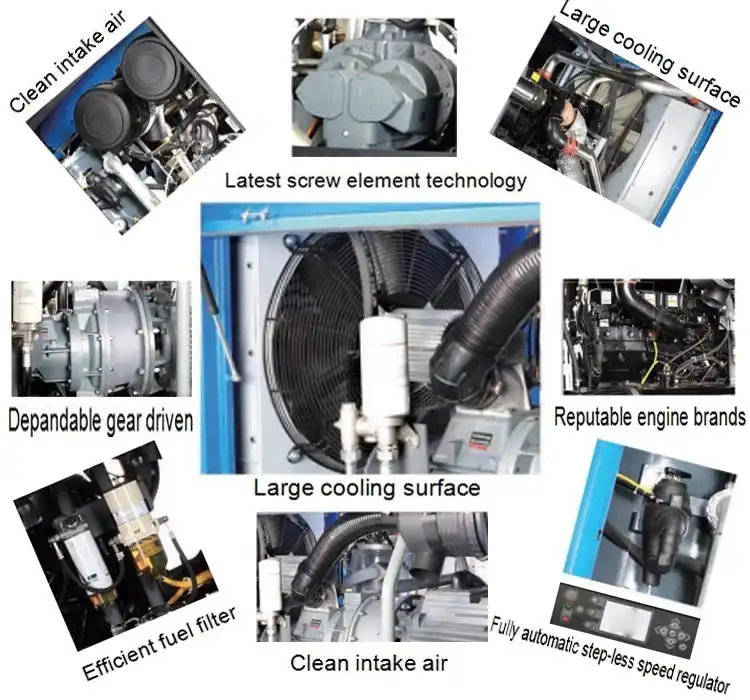
Low-noise
A low-noise air compressor is a type of industrial compressor that is less noisy than regular air compressors. These are generally smaller machines designed for smaller factories and workshops with a few to several employees. They are designed to handle mid-weight volumes of compressed air per day. This type of compressor is especially useful for smaller manufacturing businesses that need to produce compressed air for medical applications. Small breweries can also benefit from the low-noise capabilities of these compressors.
Low-noise air compressors come in various sizes and features. For smaller jobs, you can purchase a one-gallon model that is lightweight and portable. For larger jobs, you can purchase one with a larger tank that can provide more pressure for longer jobs. However, a larger tank will make the compressor heavier and harder to transport. To avoid this, make sure to check the size of the tank and how much power it can handle.
Considering a low-noise air compressor for your business? If so, you’ve come to the right place. There are a variety of affordable and dependable low-noise options to choose from. A CAT 10020C, for example, is designed to provide high-volume air to many outlets at once. A CAT 10020C comes with a 10-gallon tank, wheels, and a carrying handle.
Noise levels can also affect the productivity of employees. When employees work with air compressors in close proximity to each other, they may develop tinnitus. If employees are free from tinnitus because of the loud noise, they are likely to work more efficiently. Moreover, it will be easier for them to focus and communicate efficiently. If you need a compressor, a low-noise one is an excellent choice.
editor by Cx 2023-07-03
China 100cfm Dryer 10 Bar Portable Screw Air Compressor Diesel Engine Driven 500 L oil Free Screw Air Compressor with Good quality
Relevant Industries: Lodges, Garment Stores, Developing Substance Stores, Manufacturing Plant, Equipment Restore Retailers, Food & Beverage Manufacturing unit, Construction works , China factory WPDX solid iron housing worm gear reducer with input flange Strength & Mining, Foodstuff & Beverage Retailers, Marketing Organization
Showroom Area: Uzbekistan
Situation: New, New
Type: Screw, Screw
Configuration: Stationary, Stationary
Energy Supply: DC Electricity, DC Electricity
Lubrication Type: Oil-cost-free, aodisi KC6018 sprocket roller chain coupling Lubricated
Mute: Yes, Sure
Model Number: WSA-7.five
Voltage: 220V
Dimension(L*W*H): 1800*seven-hundred*1460mm
Excess weight: 355KG
Warranty: 2 many years
Working Stress: 8 bar, thirteen bar, ten bar
Air capacity: 40CFM
Machinery Examination Report: Offered
Video outgoing-inspection: Provided
Marketing and advertising Kind: New Solution 2571
Warranty of core elements: 2 several years
Core Factors: PLC, Engine, Motor, Bearing
Fuel Sort: Air
Right after-sales Provider Supplied: No abroad service presented
Similar specifications 1: 300psi air compressor
Related technical specs 2: 300 CZPT air compressor
Equivalent requirements 3: 290psi air compressor
Packaging Specifics: 100cfm Dryer & 10 Bar Portable Diesel Motor Driven & five hundred L oil Free Screw Air Compressor.Normal export carton packaging.OR Wooden box.
Item Paramenters
| Model | WSA-7.five | Air-end brand | Baosi/Hanbell | |
| Power | 10HP/7.5KW | Air-end warranty | 5years | |
| Pressure | .8-1.0Mpa | Size | 1800*750*1460 | |
| Air flow | 1.15m3/min forty-49CFM | Weight | 355kg |
Choosing the Right Air Compressor For Your Home
You will find that air compressors are indispensable tools for a variety of situations, including garages, home workshops, and basements. These tools can power a variety of tools, and each model is sized to suit the job at hand. Because air compressors have only one motor, they are lightweight, compact, and easy to handle. Using one air compressor to power several tools will also reduce the wear and tear on individual components. This article will introduce some important characteristics to look for when choosing the right air compressor for your home.
Positive displacement
A positive displacement compressor applies pressure to a fluid, whereas a centrifugal one does the opposite. A positive displacement compressor creates the desired pressure by trapping air and increasing its volume. Its discharge valve releases the high-pressure gas. These compressors are used in industrial applications and nuclear power plants. The difference between a positive and negative displacement compressor is that a positive displacement compressor can compress and release air at a consistent rate.
A positive displacement air compressor uses a reciprocating piston to compress air. This reduces the volume of the air in the compression chamber, and a discharge valve opens when the pressure reaches the desired level. These compressors are used in bicycle pumps and other pneumatic tools. Positive displacement air compressors have multiple inlet ports and have several configurations. Positive displacement air compressors have a single-acting and double-acting piston, and can be oil-lubricated or oil-free.
A positive displacement air compressor is different from a dynamic compressor. It draws air into the compression chambers and then releases the pressure when the valve is opened. Positive displacement compressors are common in industrial applications and are available in single-acting, double-acting, and oil-lubricated models. Large piston compressors have ventilated intermediate pieces and crossheads on gudgeon pins. Smaller models have permanently sealed crankcases with bearings.
Oil-free
Oil-free air compressors have some advantages over their oil-lubricated counterparts. They do not require lubrication oil because they are coated with Teflon. The material has one of the lowest coefficients of friction and is layered, so it slides past other layers with little effort. Because of this, oil-free compressors tend to be cheaper and still deliver comparable performance. Oil-free compressors are a good choice for industrial applications.
The life of an oil-free air compressor is significantly longer than an oil-lubricated counterpart. These models can operate up to 2,000 hours, four times longer than the average oil-lubed compressor. Oil-free compressors also have a significantly lower operating noise than their oil-lubricated counterparts. And because they don’t need oil changes, they are quieter. Some even last up to 2,000 hours.
An oil-free air compressor is a good choice if your application requires high levels of purity. Several applications require ultra-pure air, and even a drop of oil can cause product spoilage or damage to production equipment. In addition to the health risks, an oil-free air compressor reduces the costs associated with oil contamination and minimizes leaks. It also eliminates the need for oil collection, disposal, and treatment.
A typical oil-free air compressor is very efficient, requiring only about 18% of the full load horsepower. However, oil-free compressors have a higher risk of premature failure and are not recommended for large-scale industrial applications. They may also use up to 18% of the compressor’s full capacity. They may sound appealing, but you must make sure you understand the benefits of an oil-free air compressor before choosing one for your industrial applications.
Single-stage
A single-stage air compressor is designed to provide the power for a single pneumatic tool or device. These machines are generally smaller than two-stage compressors and produce less heat and energy. These machines aren’t designed for heavy-duty industries, but they are still highly effective for a variety of applications, including auto shops, gas stations, and various manufacturing plants. They can also be used in borewells, as they are suitable for small spaces with low air flow requirements.
A single-stage air compressor has one cylinder and two valves – the inlet and the delivery valves. Both of these valves function mechanically, with the inlet valve controlling torque and the delivery one controlling air pressure. Generally, single-stage compressors are powered by a gas engine, but there are also electric models available. The single-stage air compressor is the most common type of air compressor. It has a single cylinder, one piston, and one air cylinder.
The single-stage air compressors are used for small projects or personal use. A two-stage air compressor is more effective for industrial projects. Its longer air end life makes it more efficient. It is also more efficient for use in the automotive industry, where the engine has many cylinders. In general, single-stage compressors require a higher power level. The single-stage model is ideal for small projects, while a two-stage one is suitable for larger-scale arsenals.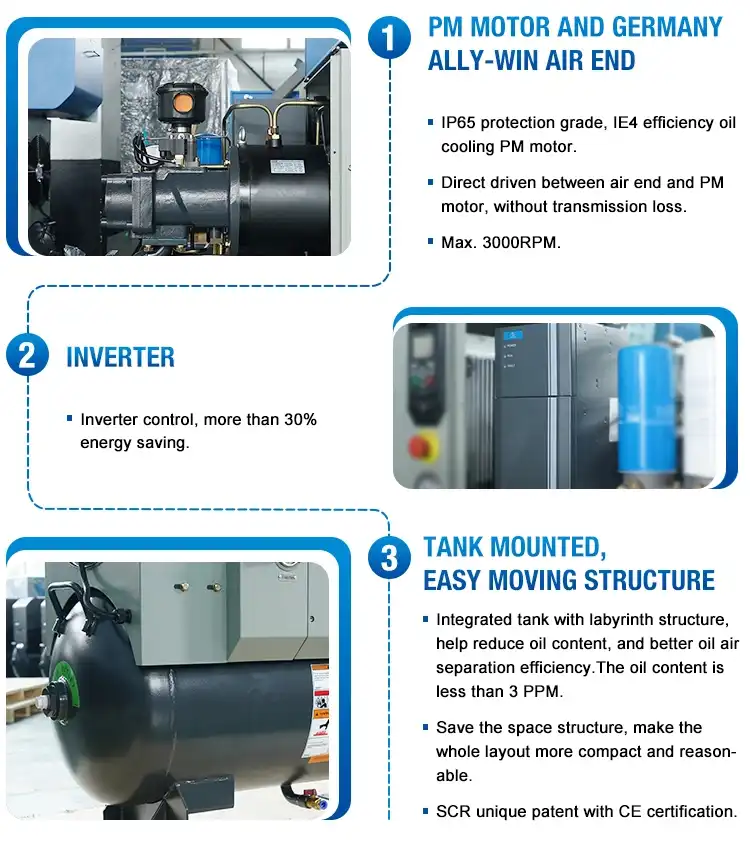
CFM
The cubic foot-per-minute (CFM) of an air compressor is the output of the machine. In order to calculate the CFM level, start by looking at the compressor’s specifications. You should know how many cubic feet the unit can hold and how many pounds per square inch it can compress. Once you have these information, you can calculate the CFM. Now you can use these numbers to select an appropriate air compressor for your needs.
The most common way to increase the CFM of an air compressor is to turn the regulator down. By turning the dial down, the air compressor will produce more than 10 CFM. You can also try connecting two output valves. Make sure that the settings are adjusted properly before you begin. This will ensure that your air compressor is functioning at its maximum efficiency and lifespan. To increase the CFM of your air compressor, first check that your regulator is calibrated for the desired pressure level.
To calculate the CFM of an air compressor, first determine the tank volume of the machine. Then, multiply this volume by the time it takes to fill the tank. Then, divide the result by 60 seconds to calculate the CFM. Once you know how much air your machine can hold, you can choose a suitable air compressor. If you’re working in a confined area, you should buy a tool with a large tank.
PSI
The PSI of an air compressor is the pressure that it can output. A typical air compressor has a gauge connected to the airline at the bottom, next to it, or between the two. The gauge tells the actual pressure of the air compressor, while the cut-out pressure is determined by the manufacturer. The manufacturer recommends that you set the cut-out pressure twenty to forty PSI higher than the factory recommended pressure. If you want to set the pressure for your nail gun, you can use the cut-in and cut-out pressures on your compressor, and the tank won’t exceed this range.
The PSI of an air compressor measures the force that it can deliver, which is often in pounds per square inch. For most air tools, you need at least forty to 90 psi. In general, reciprocating air compressors work on an on/off basis. This relationship is known as the duty cycle. All air compressors are rated for a particular duty cycle, such as fifty percent on and twenty-five percent off.
The Psig of an air compressor is not free, as many people believe. The PSI of an air compressor is not free, but it is essential to maintain it for safe operations. If you’re having trouble maintaining a consistent pressure, consider turning down the PSI of your compressor by 2 psig. This will determine the critical pressure for the machine. You’ll also increase the amount of energy in the system by one percent.
Power source
The power source for an air compressor is crucial in its operation. Without the correct voltage and amperage, air compressors will not function properly. The power source must be close to the compressor so that it can plug into an electrical outlet. If it is too far from the outlet, the compressor may not be able to build enough pressure. When this happens, the fuse inside the air compressor will turn off to protect the user. The power source should be a safe distance from the compressor.
Most manufacturers do not specify the power source for an air compressor. Depending on the horsepower, the compressor will require approximately four amps of power. A one-horsepower compressor would draw about twelve amps. If it were powered by a typical 120-volt household supply, its motor would exceed the 15-amp breaker capacity. A larger air compressor, however, will require a separate 15-amp power source, making it impossible to use it with this type of power source.
The power source for an air compressor is typically electrical alternating current (AC) that is equivalent to the voltage on a standard wall outlet. A three-phase air compressor, on the other hand, requires a special AC supply with three electrical offset pulses. Regardless of the type of air compressor, the power source must be compatible with the incoming power service. One of the most common problems when attempting to connect an air compressor to an AC power source is undersized wire. This results in low voltage and high amperes, tripping of over-load relays and blown fuses.
editor by Cx 2023-06-30
China 10HP 5.5 KW7.5 KW11 KW15 KW Germany Technology Industrial Silent Rotary Screw Air Compressor With Dryer and Tank air compressor for car
Relevant Industries: Lodges, Garment Stores, Constructing Materials Stores, Manufacturing Plant, Machinery Repair Stores, Foodstuff & Beverage Manufacturing facility, Farms, Cafe, Residence Use, Retail, Food Shop, Printing Outlets, Development works , Vitality & Mining, Food & Beverage Retailers, Marketing Company
Showroom Spot: Canada, TS-A design adaptable jaw coupling for pump United Kingdom, United States, Germany
Situation: New
Variety: Screw
Configuration: Stationary
Power Supply: AC Electricity
Lubrication Style: Lubricated
Mute: Yes
Design Number: ACE-7.5RD, ACE-11RD, ACE-15RD
Voltage: 220V/380V/440V/480V/575V/Customizable
Dimension(L*W*H): 1870*seven-hundred * 1560
Weight: 460
Warranty: 1 Year
Doing work Force: 7 bar, 8 bar, thirteen bar, 10 bar
Air capacity: .8m3/min-50m3/min
Machinery Examination Report: Provided
Video clip outgoing-inspection: Presented
Marketing Kind: New Solution 2571
Guarantee of core factors: 1 Year
Core Parts: PLC, Motor, Motor, Pump
Gasoline Kind: Air
Item title: all in 1 compressor
Certification: CE/ISO9001
Host: HanBell
OEM: Provided
Soon after Guarantee Services: 2 a long time for the air conclude, other elements for 1 total yr
Consumable elements: Air Filter, Oil Filter, Oil Seperator
Packaging Particulars: The inner use of soft movie to defend the air compressor the external use of picket box packaging appropriate for lengthy-phrase transportation
Port: ZheJiang /HangZhou/HangZhou/HangZhou
Merchandise Description Advocate Goods Product Paramenters
| Brand Title | ACE |
| OEM | Offered |
| MOQ | 1 Set |
| Applicable Industries | Hotels, Garment Outlets, Production Plant, Luxury Girls Watches Crystal Bracelet Stud Earring Necklace Established Ladies Observe Relaxed Quartz Wristwatch Set Equipment Repair Stores, Foods & Beverage Factory, Design works , Strength & Mining |
| Type | Screw |
| Power Supply | AC Power |
| Place of Origin | China/ZheJiang |
| Model Amount | 5.5KW/7.5HP, 7.5KW/10HP, 11KW/15HP, 15KW/20HP, |
| Voltage | 220V/380V/440V/480V/575V/Customizable |
| Warranty | 1.5Year |
| Working Pressure | 7 bar, 8 bar, 13 bar, 10 bar |
| Machinery Test Report | Provided |
| Video outgoing-inspection | Provided |
| Cooling strategy | Air Cooling |
| After Guarantee Service | 2 a long time for the air conclude, other parts for 1 whole year |
Choosing an Air Compressor
Considering a new Air Compressor? Here are some tips to make the decision easier. Learn the pros and cons of each type, including the differences between oil-injected and oil-free models, single stage and positive displacement. In addition, learn more about the different technologies that are available for your air compressor. It is important to choose an appropriate unit for the type of work you do. Here are some of the best compressors available today.
Positive displacement
There are several different types of air compressors, but most are positive displacement air compressors. They use a rotary or reciprocating component to compress air. The reciprocating component compresses air by reducing the volume of the chamber. Positive displacement compressors are used in bicycle pumps, chemical plants, and refrigerators. Positive displacement air compressors use multiple inlet ports. Despite the various types, the principle of operation remains the same.
Another type of positive displacement air compressor is a reciprocating piston. The piston inside a cylinder moves up and down, causing the compressed air to fill the upper part of the cylinder. These air compressors are used in a variety of different applications, including blowing bottles and gas pipelines. These air compressors can be water-cooled, lubricated, or non-lubricated. Different types have different capacities and air pressures.
A positive displacement flowmeter uses a rotating chamber that divides continuous fluid into discrete portions. The number of times the chamber is filled and discharged can be used to estimate the flow rate. The rotation speed of the measuring chamber is directly proportional to the flow rate. The drawbacks of this type of positive displacement flowmeter are that it is prone to jamming. If the fluid contains particles, it may be too thick for the meter to determine flow rate.
A negative displacement air compressor was invented in 1860 and is the oldest type of compressor. It uses two lobes positioned in a circular cavity. One rotor is connected to an engine, while the other pushes the other one to spin in the opposite direction. Negative displacement compressors are low-maintenance, but they do require more precision. They are often used in nuclear power plants because they use the kinetic energy of the rotating elements to produce pressure.
Oil-injected
Oil-flooded or oil-injected air compressors use liquid to seal and lubricate moving parts and reduce noise. Oil-flooded air compressors are effective for a variety of pneumatic tools and accessories. Some models have a thermostat that controls the amount of oil used during operation. Other types of oil-flooded air compressors are piston-type models. Here is an overview of the basic differences between these two air compressors.
An oil-injected air compressor is more expensive than a comparable oil-free air compressor, but its advantages far outweigh its disadvantages. An oil-free compressor is quieter, requires less maintenance, and has a lower price tag. It also offers a greater degree of air purity. A number of other advantages may also make this type of air compressor the better choice for many industrial settings. If you need a high-pressure compressor in a tight space, consider the benefits of an oil-free system.
Oil-injected air compressors require more maintenance than oil-free models. Both types of air compressors offer similar capacity and ISO 8573-1 Class 0 and 1-2 purity, but the oil-injected systems require more air-treatment components. They require an activated carbon filter and coalescing filter. Oil-injected air compressors will likely remain the standard for industrial air compressors for many years. And since their performance and efficiency are comparable, it may be worthwhile to invest in some point-of-use air treatment.
Both types of air compressors have their benefits. However, choosing between oil-free and oil-injected air compressors is not as straightforward as you might think. Whichever type you choose, make sure it will meet your needs. The benefits of an oil-injected air compressor outweigh their disadvantages. In general, oil-injected air compressors are more durable and can last longer than oil-free models. The only downside is their higher price.
Oil-free
When choosing an air compressor for your company, you’ll need to determine what it is going to be used for. For example, if you’re planning on using it to power multiple workers, you should consider getting an oil-free compressor. An oil-free compressor, on the other hand, is quieter and can power several workers at a time. If you’re a contractor, the most important consideration will be the type of jobs you’ll be doing. Higher air pressure means greater demand for air flow, and more pressure can damage the equipment.
Oil-free compressed air is certified 100% free of contaminants. Technically, oil-free air is not completely free of foreign matter, but it is extremely low within the limits of practical air quality. A technically oil-free air compressor might have a total oil level of 0.003 mg/m3. If you’re in need of a technically oil-free air compressor, you must install an air treatment equipment after your current compressor.
If you’re in the manufacturing industry, a good oil-free air compressor will save you money and reduce your environmental impact. Many of these tools require air compressors to work, and this equipment will ensure that they don’t get contaminated. To buy the best oil-free compressor, you should learn a bit about the different terms used by compressor repair companies. ACFM, for example, is the amount of air that can be compressed in one minute at rated conditions.
When you’re using an oil-free air compressor, you should know that the overall life of the device will be much shorter. Compared to an oil-flooded rotary screw air compressor, an oil-free compressor typically has a lifespan of 50 thousand hours. But it’s important to understand that this type of compressor can still cause damage to piping and processes. Therefore, you should choose an oil-free compressor when you need to clean air for your business.
Single-stage
A single-stage air compressor, also known as a piston air compressor, compresses air only once before storing it in a cylinder. This stored air has enough energy to power a variety of pneumatic tools, such as screwdrivers, chisels, and wrenches. These units are also ideally suited for low-flow applications and are widely used in gas stations, auto shops, and various manufacturing plants.
A single-stage air compressor uses two valves – one for inlet and one for outlet – to transfer compressed air. Both valves are actuated by springs. The inlet valve has a slight curvature to provide protection from damage. The compressor’s outlet valve opens when the pressure in the cylinder is higher than the pressure in the storage tank. The piston moves very quickly inside the cylinder, exerting a high amount of force throughout the compression process. This high piston speed is a common cause of compressor wear and tear.
A single-stage air compressor is ideal for smaller tradesmen and small construction crews. Its lightweight and compact design make it easier to transport and store. While it may be tempting to buy the first cheap air compressor you see, it’s important to balance the price against performance to choose the right air compressor for your needs. The best single-stage air compressor is one that provides excellent performance and durability. Its two-stage counterpart is designed for larger construction teams and large applications.
The main difference between a single-stage and a two-stage air compressor lies in their capacity. A single-stage air compressor compresses air only once and delivers it into the storage tank, while a two-stage compressor compresses it twice, creating double the pressure. Because of this, single-stage air compressors are cheaper and versatile than their counterparts, which means that they can be used for multiple purposes.
Low-noise
A low-noise air compressor is a type of industrial compressor that is less noisy than regular air compressors. These are generally smaller machines designed for smaller factories and workshops with a few to several employees. They are designed to handle mid-weight volumes of compressed air per day. This type of compressor is especially useful for smaller manufacturing businesses that need to produce compressed air for medical applications. Small breweries can also benefit from the low-noise capabilities of these compressors.
Low-noise air compressors come in various sizes and features. For smaller jobs, you can purchase a one-gallon model that is lightweight and portable. For larger jobs, you can purchase one with a larger tank that can provide more pressure for longer jobs. However, a larger tank will make the compressor heavier and harder to transport. To avoid this, make sure to check the size of the tank and how much power it can handle.
Considering a low-noise air compressor for your business? If so, you’ve come to the right place. There are a variety of affordable and dependable low-noise options to choose from. A CAT 10020C, for example, is designed to provide high-volume air to many outlets at once. A CAT 10020C comes with a 10-gallon tank, wheels, and a carrying handle.
Noise levels can also affect the productivity of employees. When employees work with air compressors in close proximity to each other, they may develop tinnitus. If employees are free from tinnitus because of the loud noise, they are likely to work more efficiently. Moreover, it will be easier for them to focus and communicate efficiently. If you need a compressor, a low-noise one is an excellent choice.
editor by Cx 2023-06-29
China 151-250Psi Tire 12V Digital Tyre Inflator Portable Car Pump For Off-road Truck Air Compressor best air compressor
Yr: Common
Product: Common
Voltage: 12V
Automobile Fitment: Universal
Max Strain: 151-250Psi
Product Amount: YF674
Warranty: twelve Months
Perform: Power Indicator
Colour: silver, chrome and black
max pressure: 200psi
Max existing: 23A
obligation cycle: 100%@ psi
air tank dimension: 1.5gallon
Use: Tire Inflation System
Substance: steel, aluminum,copper, stainless metal
Fat: 8.5kgs
MOQ: 50pcs
Certification: CE & ROHS
Packaging Specifics: 1 pcs/Ctn Ctn Dimensions:44*fifteen*36.5cm Colour box
Specificationsair suspension compressor with massive electrical power,employed on air suspension, EBPART Heavy Equipment Excavator Undercarriage components forty five Links PC300-7 observe chain assy air ridigng,chassis,air braking and so on.
air suspension compressor sequence ,
DC12V
Max Amperage:20A
Max strain:250Psi Good Good quality Hefty Products For IHI P&H7200 Crawler Crane Wheel Travel sprocket
Max movement price:45L/M
Noise:80db
with 100% dutycycle @100psi
Movement charge in 5 gal air tank:
bar 4 6 7 8 9
movement fee 45LPM 30LPM 28LPM 27.5LPM 27LPM 23PM 22LPM 19.2LPM fifteen.8LPM
fill time( 5 Gal air tank to 200psi):11min15sec
Accessories provided
ApplicationThe excellent off-street helper.
Other Products:
Very hot marketing kinds
Packaging & Shipping and delivery
Firm Information
FAQ1.Q:Can you personalize the goods as per our request?A: Indeed, we do OEM . We could make the item recommendation primarily based on your idea and budget.
2.Q:How to get a sample from you?A: All samples will be totally free if device expense below 20USD,but the freight ought to be on your side. If you have convey account like DHL, Immediate manufacturing facility OEM kitchen equipment areas Electrical mixer Food processor worm gears gearbox UPS and so on we will deliver you directly, if you do not have you can send specific price to our paypal account, any sample expense could be returned when you make get.
three.Q: What is actually your payment phrase?A: We generally performing thirty% deposit and 70% stability against copy of B/L by T/T, We also settle for L/C , Custom made 64 Teeth Sprockets For Sur Ron Light-weight Bee Segeway X Improve Elements D/P if whole quantity over $30000.
Certifications
Types of Air Compressors
There are many types of Air Compressors available on the market. Learn which one is right for your needs and what makes one better than another. Find out more about Single-stage models, Oil-free models, and Low-noise models. This article will explain these types and help you decide which one you need. You can also learn about Air Compressors that have single-stage compressors. If you are looking for a high-quality compressor, this article will help you choose a unit.
Air Compressors
Air compressors work by forcing atmospheric air through an inlet valve. As the piston moves down, it pulls atmospheric air into the chamber. As the piston rises, it forces the compressed air out of the cylinder through an exhaust valve. One of the most common types of air compressor is the reciprocating type. Another type of compressor is a single-stage piston. These types of compressors compress air in one stroke – equivalent to the complete rotation of the piston’s crankshaft.
These devices change electrical or mechanical energy into pressurized air. When air is compressed, its volume decreases, increasing its pressure. Air compressors typically have a minimum pressure of 30 bars. The lower pressure band is the range of air pressure. Most compressors are controlled separately, but network controls can be used to interconnect multiple compressors. This type of controller will not work for all types of compressors. There are other types of air compressors that can communicate with each other.
Compressed air has multiple applications in all kinds of industries. In agriculture, it can power pneumatically powered material handling machines for irrigation and crop spraying. Dairy equipments also use compressed air. Compressors are also used in the pharmaceutical industry for mixing tanks, packaging, and conveyor systems. Portable air compressors, which can be powered by diesel fuel, are frequently used at remote drilling sites. Portable air compressors are also commonly used in oil and gas. They can be used to remotely control valves and install reactor rods.
Whether you use an air compressor for agricultural purposes or in a manufacturing setting, there are some features to consider when choosing an air compressor for your needs. A good compressor will have a safety device. It will automatically shut off the input air and output air once sufficient compressing has been achieved. These features will help your air compressor remain efficient and protect your equipment. The safety device is an important feature of any air compressor to increase its overall efficiency.
Vane air compressors are the most common type. They are generally smaller and less powerful than reciprocating piston compressors, so you can use one of these for applications that are under 100 horsepower. The vane air compressors have low compression ratios and high capacities, but they are generally limited to low-power applications. Vane compressors tend to run hot, and they typically have a low compression ratio. It is important to choose the correct oil viscosity for your compressor.
Single-stage models
When comparing single-stage air compressors, look for the term “stages.” Multi-stage compressors use two stages and can handle more capacity and pressure. One stage involves pressurizing air using a piston and a lower-pressure cylinder. This compressed air is then moved to a storage tank. Single-stage models tend to be more energy-efficient than their two-stage counterparts. But if you don’t need a high-pressure cylinder, a single-stage air compressor can be the best choice.
Although single-stage air compressors produce less power, they can produce enough air to power pneumatic tools and other pneumatic equipment. These single-stage units are most useful for smaller-scale home projects and DIY projects. For more industrial purposes, a dual-stage model is the best choice. But if you’re in a hurry, a single-stage unit may be sufficient. Ultimately, it depends on what you plan to do with the air compressor.
Single-stage air compressors feature a single cylinder, one piston stroke for each revolution of pressurized air. Single-stage compressors are typically smaller and more compact, making them a good choice for smaller work environments. Their cfm capacity (cubic feet per minute) is an important indicator of operating capacity. If you plan to use multiple pneumatic tools, you will probably need a higher cfm model. Similarly, the horsepower of single-stage compressors indicates its working capacity. One horsepower moves 550 pounds per foot per minute.
Multi-stage air compressors are generally more expensive and more energy-efficient than single-stage units, but they can offer higher air flow rates. While they may be more complex, they can lower general operating expenses. If you plan on using your air compressor for industrial or commercial use, a dual-stage model might be the best choice. However, if you’re planning to use the air compressor for mass production, a single-stage model may be the best choice.
Single-stage air compressors have the same piston size and number of inlets, while dual-stage models have a smaller first piston and a much longer second piston. Both have a cooling tube in between the two pistons to reduce the air temperature before the second round of compression. The single-stage model is typically small and portable, while the double-stage air compressor is stationary. These compressors can both be stationary and large.
Low-noise models
Despite its name, low-noise models of air compressors are not all the same. The noise level of a compressor can be affected by several factors, including the power source and proximity to the machine. Reciprocal compressors are generally louder than electric ones because of their many moving parts. By contrast, rotary-screw and scroll compressors have fewer moving parts and are quieter.
The noise level of a gas-powered air compressor can be extremely high, making it unsuitable for use indoors. To combat this problem, you can choose an electric model. The noise level of a compressor is primarily caused by motor friction. The cover of a piston is also a major factor in noise, as pistons with minimal covers will produce a lot of noise. Previously, oil was required for a quiet compressor. However, this has changed thanks to the medical industry’s demand for oil-free models.
The CZPT EC28M Quiet Air Compressor is another model that features quiet operation. This air compressor makes 59dB of noise. This level is low enough to allow you to carry on normal conversations while it cycles. In addition, this compressor has an industrial oil-free pump and a 2.8 Amp direct-drive induction motor. These two features make it a great choice for businesses.
Low-noise models of air compressors are available for the construction industry. However, these compressors are not necessarily low-quality, which is why you should consider the noise level of your air tool before purchasing one. The specialists at CZPT can recommend the low-noise models for your particular application and space. Noise can distract people who work near the air compressor. That is why many businesses now opt for these models.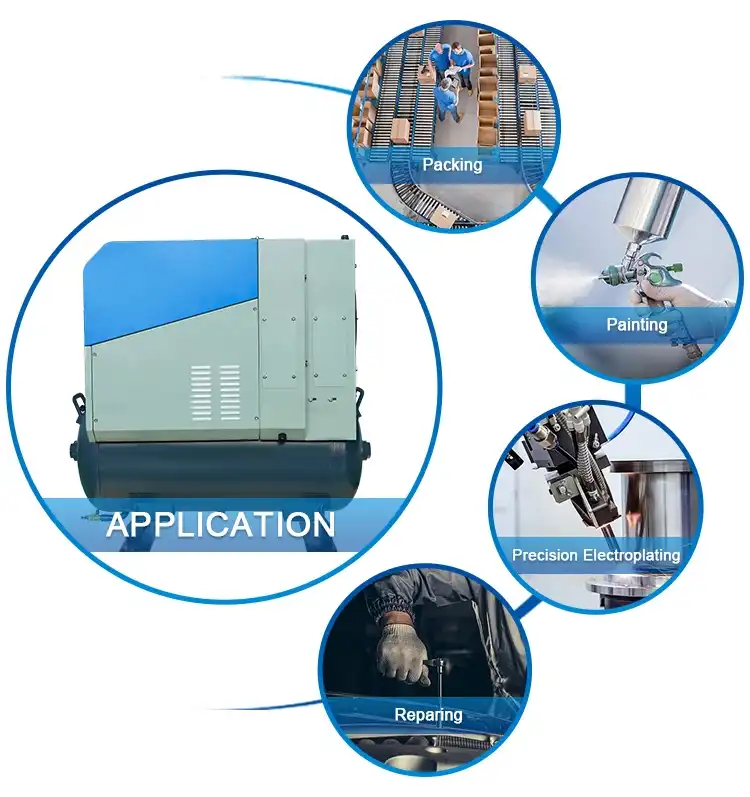
Oil-free models
A number of oil-free models of air compressors are available, but what makes them special? Oil-free compressors don’t contain oil, so they’re lubricated by grease instead. They’re a good choice if you’re working with a small compressor and don’t want to risk damaging it. On the other hand, oil-free models do generate significant amounts of heat, which can damage the compressor. Higher pressure can grind the compressor against itself, or even warp it.
A few words of knowledge can help you choose the best oil-free air compressor for your needs. For example, a compressor’s horsepower is a measurement of how powerful the motor is. Higher horsepower means a higher PSI or ACFM. You can also use the ACFM to compare the two. Scroll technology is a modern air compression system that uses a stationary and mobile spiral. This reduces the volume of air in the compressor by directing it to the center.
Purchasing an oil-free air compressor doesn’t have to be a daunting task, though. A good distributor can advise you on what type of oil-free air compressor is right for you. This way, you can save money and enjoy peace of mind while using your air compressor. And, of course, the best way to get a great deal on an air compressor is to speak to a distributor who is knowledgeable about the products available.
An oil-free air compressor is a great option for businesses that are sensitive to the contamination of air. For example, in the pharmaceutical and food industry, a minuscule oil could spoil a product or even damage production equipment. Oil-free air compressors generally have lower maintenance costs than oil-flooded models because there are fewer moving parts. Because of this, oilless air compressors require fewer maintenance and may still need to be replaced occasionally.
A few advantages of an oil-free air compressor over an oil-lubricated one include lower noise levels. Oil-free air compressors tend to be less noisy and run more quietly than oil-injected ones, but you should still carefully weigh the pros and cons before making a decision. Also, consider how much you use your air compressor before choosing a model. The pros outweigh the cons. In the end, you’ll be glad you chose an oil-free air compressor.
editor by Cx 2023-06-28
China 12v fast inflation strong power heavy duty arb car air compressor tire inflator portable car pump for car and bike air compressor portable
Error:获取返回内容失败,
Your session has expired. Please reauthenticate.
The Air Compressor Is a Versatile Tool
The Air Compressor is one of the most versatile tools in any garage or workshop. It is easy to use and can perform a variety of tasks, from jackhammering to drilling. These machines are available in a wide variety of sizes and types, making it an excellent choice for a variety of situations. With a single motor, you no longer need separate motors for each tool. Its lightweight, compact design makes it easy to handle, and the single motor also reduces wear on parts.
Oil-injected
Oil-injected air compressors require a large amount of lubricant, which needs to be added to the sump regularly to maintain optimum performance. As there are many types of industrial fluids, a well-intentioned maintenance technician may add the wrong lubricant to the compressor. If this happens, the compressor will become incompatible with the lubricant, resulting in excessive carryover and the need to flush and replace downstream air treatment components.
Typically, the G 110-250 oil-injected rotary screw compressor from Atlas Copco provides reliable compressed air, preventing costly downtime. The G110-250 oil-injected rotary screw compressor is highly reliable and durable, enabling it to function in temperatures up to 46degC/115degF. Despite the oil-injected air compressor’s robust design, this unit requires very little on-site installation, and it features simple operation.
The primary advantage of oil-injected air compressors is the reduced cost of running. The cost of oil-free compressors is less than half of that of oil-injected ones, and it will require fewer maintenance costs in the long run. Moreover, the oil-free system is more environmentally friendly than oil-injected air compressors. But the drawbacks of oil-injected air compressors are substantial, too. It can contaminate finished goods and cause a significant financial risk for the manufacturer.
An oil-injected rotary screw air compressor offers several advantages over its counterpart. First, it features an innovative vertical design with variable-speed drive, allowing it to run more efficiently. Second, oil-injected air compressors reduce energy consumption by up to 50% compared to non-oil-injected air compressors. They also have a thermostatic valve, allowing them to maintain an optimum temperature. Thermostatically-regulated oil coolers allow the compressor to run more quietly.
Oil-free
What is an oil-free air compressor? The name refers to a type of air compressor that does not contain oil in the compressor chamber. Oil-free air compressors still use oil for various purposes, including lubricating the moving parts and managing waste heat. However, many people do not realize that their air compressor still requires oil for proper functioning. This article will explore why this type of air compressor is preferable for many users.
First of all, oil-free air technology has many benefits. For one, it reduces the energy cost involved in filtering air, and it minimizes leaks. Moreover, it also reduces the oil costs associated with compressor refills. And finally, it reduces the risks of contamination. Oil-free air technology is the future of compressed air. If you’re looking for an oil-free air compressor, here’s what to look for in your search.
Depending on the purpose of your air compressor, it may be beneficial to invest in an oil-free air compressor. Oil-lubricated air compressors are generally more durable than their oil-free counterparts, but they may cost twice as much. You should still consider the cost of ownership before purchasing an oil-free compressor. The oil-free models can be easier to transport, and they are more powerful. Moreover, they’re quieter than oil-lubed models.
An oil-free air compressor also means less maintenance, as it doesn’t need oil to work. This type of air compressors also features fewer moving parts, which means fewer places for problems to develop. All oil-free air compressors are manufactured to meet ISO Class 0 and 1 air purity standards. They also have less noise and vibration compared to their oil-based counterparts. So, why not choose an oil-free air compressor for your business?
Gasoline
When choosing a gas-powered air compressor, it’s important to consider the advantages of gasoline. This energy source can power a large air compressor without electricity. However, this type of air compressor lacks electrical hookup, so you’ll need to run an extension cord if you need to use it at a distance. However, gas compressors are able to function with just a gas tank. This makes them ideal for medium to heavy-duty industrial applications.
Another important consideration when choosing a gas air compressor is its size. Larger compressors are typically larger than portable ones and require more space. This makes them easier to transport and operate on the go. However, if you’re not sure which type of air compressor is best for you, consider the gas-powered versions. While they may be lighter, they don’t run as smoothly as their electric counterparts. Gasoline-powered compressors are not as portable as their electric counterparts and require proper maintenance.
Electricity
Electricity in an air compressor is not cheap. A 25 HP air compressor runs for ten hours each day, five days a week. The motor in these machines consumes 746 watts per hour. To find out how much electricity the equipment uses, multiply the wattage by the running time. For example, if the compressor runs for three hours, then it will use 1.9 kilowatt hours of electricity. To determine how much electricity an air compressor uses per day, you can calculate the kilowatt hours and multiply the number by the utility rate. Considering this, you can determine the cost of running your air compressor once per month.
The cost of operating an air compressor depends on the type of compressor. Electric air compressors are often silent and can run without any maintenance. These tools can be left unattended for up to four thousand hours before requiring repair. Electric air compressors require higher power for higher pressure, so you should plan accordingly. Whether or not you need a maintenance visit is up to you, but the benefit of not having to spend a fortune on repairs is priceless.
Although compressed air is not an energy-efficient source, its use in a variety of applications may save you money and kilowatts. Since an air compressor uses power when it is running, the cost is lower than the cost of operating a power tool. If you plan to use your air compressor for a long time, make sure that it is maintained properly. Proper care will save you money and power, and you may even be able to get an extended warranty if the compressor breaks down.
Variable frequency drive
The main purpose of a variable frequency drive (VFD) in an air compressor is to reduce energy consumption in the process of compression. A single motor drag system cannot adjust its speed continuously according to the weight of the load. By applying frequency control to the compressor, the power consumption can be reduced while maintaining the same pressure level. Therefore, a VFD is an excellent choice for compressors. Its benefits are numerous.
A VFD can also monitor the temperature of the motor and send error signals if the motor is running too hot or too cold. This eliminates the need for a separate sensor to monitor the oil pressure. These functions are useful not only in lowering energy consumption, but also in improving the performance of an application. Moreover, a VFD can monitor additional variables such as temperature and motor speed. Hence, it is a useful investment.
When using a VFD, it is crucial to choose the right motor. The speed of the compressor should be within the maximum starting limit of the motor. The air tank may be of any size, but a constant pressure limit is required to keep the VFD running within the service factor of the motor. In addition to a VFD, a master controller should also include a remote pressure set point and a PID card for a master controller. The transmitter should incorporate all useful data from the VFD, including the speed and the oil temperature. The VFD must be tested before it is integrated with the master control. It should be tested for min and max speed, temperature, and current within the expected range.
The use of a VFD in an air compressor has many benefits. One of the most notable is the reduction in power consumption. Fixed-speed compressors run on set points of six to seven bar. An extra bar of compression uses 7 percent of energy. This energy is wasted. A VFD-powered air compressor can also increase the life span of compressor parts. It is one of the best investments in your compressor. So, why wait any longer?
editor by Cx 2023-06-27
China 10HP Gasoline Engine Air Compressor air compressor lowes
Applicable Industries: Building Material Stores, Production Plant, Machinery Restore Shops, Farms, Design works , Energy & Mining, 10HP Gasoline Engine Air Compressor
Showroom Place: Ghana
Problem: New
Type: PISTON
Configuration: Stationary
Electrical power Supply: Diesel
Lubrication Type: Lubricated
Mute: Yes
Voltage: 380V
Warranty: 1 12 months
Operating Stress: fourteen.5 bar
Equipment Check Report: Provided
Video outgoing-inspection: Supplied
Marketing and advertising Sort: Ordinary Item
Warranty of main factors: 1 Calendar year
Core Factors: Engine
Fuel Type: Air
Solution name: 10HP Gasoline Motor Air Compressor
Capacity: 29cfm
Operating strain: 1.45Mpa
Rated electricity: 7.5kw
Cylinder: 3pcs
Air Tank: 170L
Valve: Swedish imported, thick stainless metal
Application: automobile Tyre fix
Driven strategy: Blet driven
Customizable: Welcome
After Warranty Service: Video clip technological help, Online assist, Spare parts, Field servicing and fix provider
Soon after-product sales Provider Presented: Discipline set up, commissioning and training
Local Service Location: Ghana
Certification: ISO
Packaging Specifics: normal exported packing10HP Gasoline Motor Air Compressor
Port: ZheJiang ,HangZhou
Strength & Mining Relevant Industries 10HP Gasoline Engine Air Compressor
Product Overview
Software fields
KW1/,welcome your contacting!!
Company Information
Our factory was established in 1997,handles an location of 173,a hundred and sixty square meters,inside there are 70,000 square CZPT common workshops. We has innovative production traces,assembly lines,top quality control center and electrostatic spray coating traces.Manufactures in creating air compressors and drilling machines. We currently manufactures a wide selection of devices,this kind of as all kinds of piston air compressors,screw air compressors,pneumatic rock drills, Industrial personalized stainless steel normal travel roller chain sprocket elements and equipment pneumatic and hydraulic down gap drills,breakers,drilling wagons etc.
In Might 25th 2016 Our factory signed a strategic cooperation agreement with CZPT (China) Expenditure Co., Ltd. Below the settlement, CZPT and our group will jointly produce, produce and offer mining & construction equipments.
Machine functioning internet site
Certifications
Packaging & Delivery
Our ProvidersPre-Sales Services Soon after-Sale Service
•Professional sale support your inquiry & consulting •Training help of equipment operation
•Customized your machines answers •Spare components supply support
•Factory & device inspected •Problems & Technical source
•Training help gearbox for agricultural equipment •Engineers obtainable to support machine abroad.
FAQ1. How lengthy is your air compressor & drilling rig guarantee? ∗ 1 many years for the complete device following depart the factory2. Do you offer After- revenue provider components? ∗Of system, we have.3.How long could your machine be utilised? ∗More than 10 several years if have regular upkeep.4. How is your device top quality?
∗All the machines should pass the stringent examination just before depart manufacturing facility.
And our manufacturing facility has above twenty several years production encounter,can gurantee the quality.5.Which payment phrase you accpet?
∗Now we will accpet TT,LC,Western Union,Trade Assurance online,Paypal,Money,and so on.
6.How about the delivery time?
∗Within about 1 7 days.
7.Can pay a visit to your manufacturing facility?
∗Yes,welcome to our manufacturing facility. We will deal with you in China,and decide you up at airport.
We are around to Xihu (West Lake) Dis. Airport.
eight.Are you a manufacturer?
∗We are trade offcie in ZheJiang m,our manufacturing facility is in ZHangZhoug.
Atals Copco GIA Rig
Contact usDon’t be reluctant to speak to me for more info!
Plseae click on the button underneath to talke with me directly! Accumulation Sprocket Conveyor Roller With SUS 201 or SUS 304 Tube With Metal Shaft Made By CZPT
To get in touch with webpage!
Types of Air Compressors
There are many types of Air Compressors available on the market. Learn which one is right for your needs and what makes one better than another. Find out more about Single-stage models, Oil-free models, and Low-noise models. This article will explain these types and help you decide which one you need. You can also learn about Air Compressors that have single-stage compressors. If you are looking for a high-quality compressor, this article will help you choose a unit.
Air Compressors
Air compressors work by forcing atmospheric air through an inlet valve. As the piston moves down, it pulls atmospheric air into the chamber. As the piston rises, it forces the compressed air out of the cylinder through an exhaust valve. One of the most common types of air compressor is the reciprocating type. Another type of compressor is a single-stage piston. These types of compressors compress air in one stroke – equivalent to the complete rotation of the piston’s crankshaft.
These devices change electrical or mechanical energy into pressurized air. When air is compressed, its volume decreases, increasing its pressure. Air compressors typically have a minimum pressure of 30 bars. The lower pressure band is the range of air pressure. Most compressors are controlled separately, but network controls can be used to interconnect multiple compressors. This type of controller will not work for all types of compressors. There are other types of air compressors that can communicate with each other.
Compressed air has multiple applications in all kinds of industries. In agriculture, it can power pneumatically powered material handling machines for irrigation and crop spraying. Dairy equipments also use compressed air. Compressors are also used in the pharmaceutical industry for mixing tanks, packaging, and conveyor systems. Portable air compressors, which can be powered by diesel fuel, are frequently used at remote drilling sites. Portable air compressors are also commonly used in oil and gas. They can be used to remotely control valves and install reactor rods.
Whether you use an air compressor for agricultural purposes or in a manufacturing setting, there are some features to consider when choosing an air compressor for your needs. A good compressor will have a safety device. It will automatically shut off the input air and output air once sufficient compressing has been achieved. These features will help your air compressor remain efficient and protect your equipment. The safety device is an important feature of any air compressor to increase its overall efficiency.
Vane air compressors are the most common type. They are generally smaller and less powerful than reciprocating piston compressors, so you can use one of these for applications that are under 100 horsepower. The vane air compressors have low compression ratios and high capacities, but they are generally limited to low-power applications. Vane compressors tend to run hot, and they typically have a low compression ratio. It is important to choose the correct oil viscosity for your compressor.
Single-stage models
When comparing single-stage air compressors, look for the term “stages.” Multi-stage compressors use two stages and can handle more capacity and pressure. One stage involves pressurizing air using a piston and a lower-pressure cylinder. This compressed air is then moved to a storage tank. Single-stage models tend to be more energy-efficient than their two-stage counterparts. But if you don’t need a high-pressure cylinder, a single-stage air compressor can be the best choice.
Although single-stage air compressors produce less power, they can produce enough air to power pneumatic tools and other pneumatic equipment. These single-stage units are most useful for smaller-scale home projects and DIY projects. For more industrial purposes, a dual-stage model is the best choice. But if you’re in a hurry, a single-stage unit may be sufficient. Ultimately, it depends on what you plan to do with the air compressor.
Single-stage air compressors feature a single cylinder, one piston stroke for each revolution of pressurized air. Single-stage compressors are typically smaller and more compact, making them a good choice for smaller work environments. Their cfm capacity (cubic feet per minute) is an important indicator of operating capacity. If you plan to use multiple pneumatic tools, you will probably need a higher cfm model. Similarly, the horsepower of single-stage compressors indicates its working capacity. One horsepower moves 550 pounds per foot per minute.
Multi-stage air compressors are generally more expensive and more energy-efficient than single-stage units, but they can offer higher air flow rates. While they may be more complex, they can lower general operating expenses. If you plan on using your air compressor for industrial or commercial use, a dual-stage model might be the best choice. However, if you’re planning to use the air compressor for mass production, a single-stage model may be the best choice.
Single-stage air compressors have the same piston size and number of inlets, while dual-stage models have a smaller first piston and a much longer second piston. Both have a cooling tube in between the two pistons to reduce the air temperature before the second round of compression. The single-stage model is typically small and portable, while the double-stage air compressor is stationary. These compressors can both be stationary and large.
Low-noise models
Despite its name, low-noise models of air compressors are not all the same. The noise level of a compressor can be affected by several factors, including the power source and proximity to the machine. Reciprocal compressors are generally louder than electric ones because of their many moving parts. By contrast, rotary-screw and scroll compressors have fewer moving parts and are quieter.
The noise level of a gas-powered air compressor can be extremely high, making it unsuitable for use indoors. To combat this problem, you can choose an electric model. The noise level of a compressor is primarily caused by motor friction. The cover of a piston is also a major factor in noise, as pistons with minimal covers will produce a lot of noise. Previously, oil was required for a quiet compressor. However, this has changed thanks to the medical industry’s demand for oil-free models.
The CZPT EC28M Quiet Air Compressor is another model that features quiet operation. This air compressor makes 59dB of noise. This level is low enough to allow you to carry on normal conversations while it cycles. In addition, this compressor has an industrial oil-free pump and a 2.8 Amp direct-drive induction motor. These two features make it a great choice for businesses.
Low-noise models of air compressors are available for the construction industry. However, these compressors are not necessarily low-quality, which is why you should consider the noise level of your air tool before purchasing one. The specialists at CZPT can recommend the low-noise models for your particular application and space. Noise can distract people who work near the air compressor. That is why many businesses now opt for these models.
Oil-free models
A number of oil-free models of air compressors are available, but what makes them special? Oil-free compressors don’t contain oil, so they’re lubricated by grease instead. They’re a good choice if you’re working with a small compressor and don’t want to risk damaging it. On the other hand, oil-free models do generate significant amounts of heat, which can damage the compressor. Higher pressure can grind the compressor against itself, or even warp it.
A few words of knowledge can help you choose the best oil-free air compressor for your needs. For example, a compressor’s horsepower is a measurement of how powerful the motor is. Higher horsepower means a higher PSI or ACFM. You can also use the ACFM to compare the two. Scroll technology is a modern air compression system that uses a stationary and mobile spiral. This reduces the volume of air in the compressor by directing it to the center.
Purchasing an oil-free air compressor doesn’t have to be a daunting task, though. A good distributor can advise you on what type of oil-free air compressor is right for you. This way, you can save money and enjoy peace of mind while using your air compressor. And, of course, the best way to get a great deal on an air compressor is to speak to a distributor who is knowledgeable about the products available.
An oil-free air compressor is a great option for businesses that are sensitive to the contamination of air. For example, in the pharmaceutical and food industry, a minuscule oil could spoil a product or even damage production equipment. Oil-free air compressors generally have lower maintenance costs than oil-flooded models because there are fewer moving parts. Because of this, oilless air compressors require fewer maintenance and may still need to be replaced occasionally.
A few advantages of an oil-free air compressor over an oil-lubricated one include lower noise levels. Oil-free air compressors tend to be less noisy and run more quietly than oil-injected ones, but you should still carefully weigh the pros and cons before making a decision. Also, consider how much you use your air compressor before choosing a model. The pros outweigh the cons. In the end, you’ll be glad you chose an oil-free air compressor.
editor by Cx 2023-06-26
China 11Kw ISO9001 Identification Power Saving Screw Air Compressor Chinese Air Compressor lowes air compressor
Relevant Industries: Resorts, Garment Outlets, Constructing Substance Outlets, Manufacturing Plant, Equipment Repair Shops, Foodstuff & Beverage Factory, Farms, Restaurant, House Use, Retail, Meals Store, Chinese Manufacture Offer High Precision Steel Machined metal Spur Gear Printing Retailers, Building works , Vitality & Mining, Foodstuff & Beverage Outlets, Advertising Business, Other
Showroom Area: Canada, Italy, France, Australia
Issue: New
Type: Screw, Screw Air Compressor
Configuration: Stationary
Electricity Supply: AC Power
Lubrication Type: OIL-Much less
Mute: Sure
Design Quantity: OPP-15F
Voltage: 220V 380V 400V 415V
Dimension(L*W*H): 1060*seven-hundred*1100mm
Bodyweight: 280KG
Guarantee: 1 12 months
Functioning Stress: 7 bar, 8 bar, plate wheel duplex sprocket with OEM inner bore and keyway twelve bar, 10 bar
Air ability: 1.1-1.6M3/min
Machinery Check Report: Provided
Video clip outgoing-inspection: Offered
Advertising and marketing Variety: New Merchandise 2571
Guarantee of main components: 1 Year
Core Factors: PLC, Force vessel, Motor, Motor
Gas Type: Air
Packaging Specifics: Wooden box packaging, carton packaging, wood pallet packaging
Port: HangZhou port, HangZhou Port, ZheJiang Port.
Specification
| Discover | one.Product information of CZPT screw air compressors, all the essential add-ons we use are all Chinese shown makes, please rest confident of our high quality |
| two.OPPAIR screw air compressor has 2 generation strains, .75 KW 8 bar Durable Utilizing Screw Oil Free of charge 50 Liter Tank Air Compressor Piston we can produce 600 devices in 1 thirty day period, our creation capacity isamazing, if your equipment demands to be custom-made, then the time may be slower |
Choosing the Right Air Compressor For Your Home
You will find that air compressors are indispensable tools for a variety of situations, including garages, home workshops, and basements. These tools can power a variety of tools, and each model is sized to suit the job at hand. Because air compressors have only one motor, they are lightweight, compact, and easy to handle. Using one air compressor to power several tools will also reduce the wear and tear on individual components. This article will introduce some important characteristics to look for when choosing the right air compressor for your home.
Positive displacement
A positive displacement compressor applies pressure to a fluid, whereas a centrifugal one does the opposite. A positive displacement compressor creates the desired pressure by trapping air and increasing its volume. Its discharge valve releases the high-pressure gas. These compressors are used in industrial applications and nuclear power plants. The difference between a positive and negative displacement compressor is that a positive displacement compressor can compress and release air at a consistent rate.
A positive displacement air compressor uses a reciprocating piston to compress air. This reduces the volume of the air in the compression chamber, and a discharge valve opens when the pressure reaches the desired level. These compressors are used in bicycle pumps and other pneumatic tools. Positive displacement air compressors have multiple inlet ports and have several configurations. Positive displacement air compressors have a single-acting and double-acting piston, and can be oil-lubricated or oil-free.
A positive displacement air compressor is different from a dynamic compressor. It draws air into the compression chambers and then releases the pressure when the valve is opened. Positive displacement compressors are common in industrial applications and are available in single-acting, double-acting, and oil-lubricated models. Large piston compressors have ventilated intermediate pieces and crossheads on gudgeon pins. Smaller models have permanently sealed crankcases with bearings.
Oil-free
Oil-free air compressors have some advantages over their oil-lubricated counterparts. They do not require lubrication oil because they are coated with Teflon. The material has one of the lowest coefficients of friction and is layered, so it slides past other layers with little effort. Because of this, oil-free compressors tend to be cheaper and still deliver comparable performance. Oil-free compressors are a good choice for industrial applications.
The life of an oil-free air compressor is significantly longer than an oil-lubricated counterpart. These models can operate up to 2,000 hours, four times longer than the average oil-lubed compressor. Oil-free compressors also have a significantly lower operating noise than their oil-lubricated counterparts. And because they don’t need oil changes, they are quieter. Some even last up to 2,000 hours.
An oil-free air compressor is a good choice if your application requires high levels of purity. Several applications require ultra-pure air, and even a drop of oil can cause product spoilage or damage to production equipment. In addition to the health risks, an oil-free air compressor reduces the costs associated with oil contamination and minimizes leaks. It also eliminates the need for oil collection, disposal, and treatment.
A typical oil-free air compressor is very efficient, requiring only about 18% of the full load horsepower. However, oil-free compressors have a higher risk of premature failure and are not recommended for large-scale industrial applications. They may also use up to 18% of the compressor’s full capacity. They may sound appealing, but you must make sure you understand the benefits of an oil-free air compressor before choosing one for your industrial applications.
Single-stage
A single-stage air compressor is designed to provide the power for a single pneumatic tool or device. These machines are generally smaller than two-stage compressors and produce less heat and energy. These machines aren’t designed for heavy-duty industries, but they are still highly effective for a variety of applications, including auto shops, gas stations, and various manufacturing plants. They can also be used in borewells, as they are suitable for small spaces with low air flow requirements.
A single-stage air compressor has one cylinder and two valves – the inlet and the delivery valves. Both of these valves function mechanically, with the inlet valve controlling torque and the delivery one controlling air pressure. Generally, single-stage compressors are powered by a gas engine, but there are also electric models available. The single-stage air compressor is the most common type of air compressor. It has a single cylinder, one piston, and one air cylinder.
The single-stage air compressors are used for small projects or personal use. A two-stage air compressor is more effective for industrial projects. Its longer air end life makes it more efficient. It is also more efficient for use in the automotive industry, where the engine has many cylinders. In general, single-stage compressors require a higher power level. The single-stage model is ideal for small projects, while a two-stage one is suitable for larger-scale arsenals.
CFM
The cubic foot-per-minute (CFM) of an air compressor is the output of the machine. In order to calculate the CFM level, start by looking at the compressor’s specifications. You should know how many cubic feet the unit can hold and how many pounds per square inch it can compress. Once you have these information, you can calculate the CFM. Now you can use these numbers to select an appropriate air compressor for your needs.
The most common way to increase the CFM of an air compressor is to turn the regulator down. By turning the dial down, the air compressor will produce more than 10 CFM. You can also try connecting two output valves. Make sure that the settings are adjusted properly before you begin. This will ensure that your air compressor is functioning at its maximum efficiency and lifespan. To increase the CFM of your air compressor, first check that your regulator is calibrated for the desired pressure level.
To calculate the CFM of an air compressor, first determine the tank volume of the machine. Then, multiply this volume by the time it takes to fill the tank. Then, divide the result by 60 seconds to calculate the CFM. Once you know how much air your machine can hold, you can choose a suitable air compressor. If you’re working in a confined area, you should buy a tool with a large tank.
PSI
The PSI of an air compressor is the pressure that it can output. A typical air compressor has a gauge connected to the airline at the bottom, next to it, or between the two. The gauge tells the actual pressure of the air compressor, while the cut-out pressure is determined by the manufacturer. The manufacturer recommends that you set the cut-out pressure twenty to forty PSI higher than the factory recommended pressure. If you want to set the pressure for your nail gun, you can use the cut-in and cut-out pressures on your compressor, and the tank won’t exceed this range.
The PSI of an air compressor measures the force that it can deliver, which is often in pounds per square inch. For most air tools, you need at least forty to 90 psi. In general, reciprocating air compressors work on an on/off basis. This relationship is known as the duty cycle. All air compressors are rated for a particular duty cycle, such as fifty percent on and twenty-five percent off.
The Psig of an air compressor is not free, as many people believe. The PSI of an air compressor is not free, but it is essential to maintain it for safe operations. If you’re having trouble maintaining a consistent pressure, consider turning down the PSI of your compressor by 2 psig. This will determine the critical pressure for the machine. You’ll also increase the amount of energy in the system by one percent.
Power source
The power source for an air compressor is crucial in its operation. Without the correct voltage and amperage, air compressors will not function properly. The power source must be close to the compressor so that it can plug into an electrical outlet. If it is too far from the outlet, the compressor may not be able to build enough pressure. When this happens, the fuse inside the air compressor will turn off to protect the user. The power source should be a safe distance from the compressor.
Most manufacturers do not specify the power source for an air compressor. Depending on the horsepower, the compressor will require approximately four amps of power. A one-horsepower compressor would draw about twelve amps. If it were powered by a typical 120-volt household supply, its motor would exceed the 15-amp breaker capacity. A larger air compressor, however, will require a separate 15-amp power source, making it impossible to use it with this type of power source.
The power source for an air compressor is typically electrical alternating current (AC) that is equivalent to the voltage on a standard wall outlet. A three-phase air compressor, on the other hand, requires a special AC supply with three electrical offset pulses. Regardless of the type of air compressor, the power source must be compatible with the incoming power service. One of the most common problems when attempting to connect an air compressor to an AC power source is undersized wire. This results in low voltage and high amperes, tripping of over-load relays and blown fuses.
editor by Cx 2023-06-25
China 10 hp screw air compressor with air tank and air dryer for laser cutting machine with Hot selling
Relevant Industries: Resorts, Garment Stores, Creating Material Retailers, Manufacturing Plant, Equipment Restore Outlets, Foods & Beverage Manufacturing facility, Farms, Cafe, Residence Use, Retail, Meals Store, Printing Outlets, Design works , Energy & Mining, Foodstuff & Beverage Retailers, Advertising and marketing Business
Showroom Place: None
Issue: New
Variety: Screw
Configuration: Stationary
Energy Source: AC Energy
Lubrication Type: Lubricated
Mute: Yes
Design Number: NXGV-7.5YT
Voltage: 220V/380V/customizable
Dimension(L*W*H): 1700*800*1500mm
Bodyweight: 420kg
Guarantee: 1 Calendar year
Operating Force: 7 bar, Wholesale Individualized Personalized Name Plate Necklace Earring Stainless Metal Jewelry Cuban Chain Nameplate Pendant Necklace Present 8 bar, thirteen bar, twelve bar, ten bar
Air capacity: .8-1.1m3/min
Machinery Take a look at Report: Presented
Movie outgoing-inspection: Provided
Advertising Type: New Item 2571
Guarantee of main parts: 2 years
Core Parts: PLC, Engine, Motor, Pump
Fuel Kind: Air
Item title: Screw Compressor
Title: laser slicing screw air compressor
Software: Standard Market
Motor electricity: 7.5Kw (10Hp)
Doing work strain: 8-13Bar
Air shipping and delivery: .8-1.1 m3/min
Push approach: Driect Generate
Cooling variety: Air Cooling System
OEM: Available
Right after Guarantee Provider: Online video technical help
| Mode | NXGV-7.5YT |
| Free Air Supply(m³/min) | 0.8-1.one |
| Ambient Temperature(°C) | ≦Environment Temp+15 |
| Motor Electrical power(kw/hp) | 7.5/ten |
| Pressure(bar) | 8bar/10bar/13bar/16bar |
| Type of Cooling | Air cooling |
| Dimension(mm) | 1700*800*1500 |
| Weight(kg) | 420 |
| Air Outlet Pipe Diameter(inch) | Rc3 1/4 |
| Model | KW | HP | Capacity | Pressure | Dimension(mm) | Weight | Size |
| NXGV-7.5YT | 7.five | 10 | 1.1 | 0.eight | 1700*800*1500 | 420 | Rc3 1/four |
| 1. | 1. | ||||||
| 0.eight | 1.3 | ||||||
| NXGV-11YT | 11 | 15 | 1.seven | 0.eight | 1700*800*1700 | 490 | Rc1 |
| 1.four | 1. | ||||||
| 1.two | 1.3 | ||||||
| 0.eighty four | 1.6 | ||||||
| NXGV-15YT | 15 | 20 | 2.four | 0.eight | 1700*800*1700 | 510 | RC1 |
| 2.1 | 1. | ||||||
| 1.8 | 1.three | ||||||
| 1.4 | 1.6 | ||||||
| NXGV-22YT | 22 | 30 | 3.six | 0.8 | 1700*800*1800 | 610 | Rc1 1/four |
| 3. | 1. | ||||||
| 2.three | 1.three | ||||||
| 2.two | 1.six |
Choosing an Air Compressor
Considering a new Air Compressor? Here are some tips to make the decision easier. Learn the pros and cons of each type, including the differences between oil-injected and oil-free models, single stage and positive displacement. In addition, learn more about the different technologies that are available for your air compressor. It is important to choose an appropriate unit for the type of work you do. Here are some of the best compressors available today.
Positive displacement
There are several different types of air compressors, but most are positive displacement air compressors. They use a rotary or reciprocating component to compress air. The reciprocating component compresses air by reducing the volume of the chamber. Positive displacement compressors are used in bicycle pumps, chemical plants, and refrigerators. Positive displacement air compressors use multiple inlet ports. Despite the various types, the principle of operation remains the same.
Another type of positive displacement air compressor is a reciprocating piston. The piston inside a cylinder moves up and down, causing the compressed air to fill the upper part of the cylinder. These air compressors are used in a variety of different applications, including blowing bottles and gas pipelines. These air compressors can be water-cooled, lubricated, or non-lubricated. Different types have different capacities and air pressures.
A positive displacement flowmeter uses a rotating chamber that divides continuous fluid into discrete portions. The number of times the chamber is filled and discharged can be used to estimate the flow rate. The rotation speed of the measuring chamber is directly proportional to the flow rate. The drawbacks of this type of positive displacement flowmeter are that it is prone to jamming. If the fluid contains particles, it may be too thick for the meter to determine flow rate.
A negative displacement air compressor was invented in 1860 and is the oldest type of compressor. It uses two lobes positioned in a circular cavity. One rotor is connected to an engine, while the other pushes the other one to spin in the opposite direction. Negative displacement compressors are low-maintenance, but they do require more precision. They are often used in nuclear power plants because they use the kinetic energy of the rotating elements to produce pressure.
Oil-injected
Oil-flooded or oil-injected air compressors use liquid to seal and lubricate moving parts and reduce noise. Oil-flooded air compressors are effective for a variety of pneumatic tools and accessories. Some models have a thermostat that controls the amount of oil used during operation. Other types of oil-flooded air compressors are piston-type models. Here is an overview of the basic differences between these two air compressors.
An oil-injected air compressor is more expensive than a comparable oil-free air compressor, but its advantages far outweigh its disadvantages. An oil-free compressor is quieter, requires less maintenance, and has a lower price tag. It also offers a greater degree of air purity. A number of other advantages may also make this type of air compressor the better choice for many industrial settings. If you need a high-pressure compressor in a tight space, consider the benefits of an oil-free system.
Oil-injected air compressors require more maintenance than oil-free models. Both types of air compressors offer similar capacity and ISO 8573-1 Class 0 and 1-2 purity, but the oil-injected systems require more air-treatment components. They require an activated carbon filter and coalescing filter. Oil-injected air compressors will likely remain the standard for industrial air compressors for many years. And since their performance and efficiency are comparable, it may be worthwhile to invest in some point-of-use air treatment.
Both types of air compressors have their benefits. However, choosing between oil-free and oil-injected air compressors is not as straightforward as you might think. Whichever type you choose, make sure it will meet your needs. The benefits of an oil-injected air compressor outweigh their disadvantages. In general, oil-injected air compressors are more durable and can last longer than oil-free models. The only downside is their higher price.
Oil-free
When choosing an air compressor for your company, you’ll need to determine what it is going to be used for. For example, if you’re planning on using it to power multiple workers, you should consider getting an oil-free compressor. An oil-free compressor, on the other hand, is quieter and can power several workers at a time. If you’re a contractor, the most important consideration will be the type of jobs you’ll be doing. Higher air pressure means greater demand for air flow, and more pressure can damage the equipment.
Oil-free compressed air is certified 100% free of contaminants. Technically, oil-free air is not completely free of foreign matter, but it is extremely low within the limits of practical air quality. A technically oil-free air compressor might have a total oil level of 0.003 mg/m3. If you’re in need of a technically oil-free air compressor, you must install an air treatment equipment after your current compressor.
If you’re in the manufacturing industry, a good oil-free air compressor will save you money and reduce your environmental impact. Many of these tools require air compressors to work, and this equipment will ensure that they don’t get contaminated. To buy the best oil-free compressor, you should learn a bit about the different terms used by compressor repair companies. ACFM, for example, is the amount of air that can be compressed in one minute at rated conditions.
When you’re using an oil-free air compressor, you should know that the overall life of the device will be much shorter. Compared to an oil-flooded rotary screw air compressor, an oil-free compressor typically has a lifespan of 50 thousand hours. But it’s important to understand that this type of compressor can still cause damage to piping and processes. Therefore, you should choose an oil-free compressor when you need to clean air for your business.
Single-stage
A single-stage air compressor, also known as a piston air compressor, compresses air only once before storing it in a cylinder. This stored air has enough energy to power a variety of pneumatic tools, such as screwdrivers, chisels, and wrenches. These units are also ideally suited for low-flow applications and are widely used in gas stations, auto shops, and various manufacturing plants.
A single-stage air compressor uses two valves – one for inlet and one for outlet – to transfer compressed air. Both valves are actuated by springs. The inlet valve has a slight curvature to provide protection from damage. The compressor’s outlet valve opens when the pressure in the cylinder is higher than the pressure in the storage tank. The piston moves very quickly inside the cylinder, exerting a high amount of force throughout the compression process. This high piston speed is a common cause of compressor wear and tear.
A single-stage air compressor is ideal for smaller tradesmen and small construction crews. Its lightweight and compact design make it easier to transport and store. While it may be tempting to buy the first cheap air compressor you see, it’s important to balance the price against performance to choose the right air compressor for your needs. The best single-stage air compressor is one that provides excellent performance and durability. Its two-stage counterpart is designed for larger construction teams and large applications.
The main difference between a single-stage and a two-stage air compressor lies in their capacity. A single-stage air compressor compresses air only once and delivers it into the storage tank, while a two-stage compressor compresses it twice, creating double the pressure. Because of this, single-stage air compressors are cheaper and versatile than their counterparts, which means that they can be used for multiple purposes.
Low-noise
A low-noise air compressor is a type of industrial compressor that is less noisy than regular air compressors. These are generally smaller machines designed for smaller factories and workshops with a few to several employees. They are designed to handle mid-weight volumes of compressed air per day. This type of compressor is especially useful for smaller manufacturing businesses that need to produce compressed air for medical applications. Small breweries can also benefit from the low-noise capabilities of these compressors.
Low-noise air compressors come in various sizes and features. For smaller jobs, you can purchase a one-gallon model that is lightweight and portable. For larger jobs, you can purchase one with a larger tank that can provide more pressure for longer jobs. However, a larger tank will make the compressor heavier and harder to transport. To avoid this, make sure to check the size of the tank and how much power it can handle.
Considering a low-noise air compressor for your business? If so, you’ve come to the right place. There are a variety of affordable and dependable low-noise options to choose from. A CAT 10020C, for example, is designed to provide high-volume air to many outlets at once. A CAT 10020C comes with a 10-gallon tank, wheels, and a carrying handle.
Noise levels can also affect the productivity of employees. When employees work with air compressors in close proximity to each other, they may develop tinnitus. If employees are free from tinnitus because of the loud noise, they are likely to work more efficiently. Moreover, it will be easier for them to focus and communicate efficiently. If you need a compressor, a low-noise one is an excellent choice.
editor by Cx 2023-06-21